|

Skiing Hakuba—
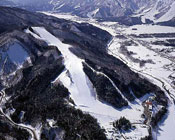
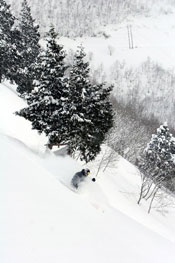
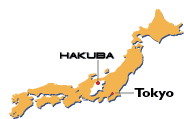
Hakuba is widely known as being a first class international resort with some of the best ski/board terrain in all of Japan. Happo-One was the venue for the downhill, the slalom and the ski jumping, and has hosted various world cup events. It boasts over 1080m (3,543 feet) of vertical skiing.
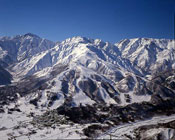
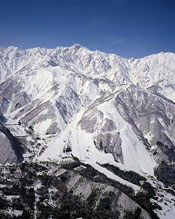
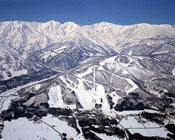
The Hakuba Valley is a huge expanse of resorts offering an incredible variety of terrain for skiers and snowboarders alike. Situated in the heart of the Japan Alps, the alpine scenery is truly spectacular with huge rugged peaks towering above the town below. From one end of the valley to the other and with 10 resorts accessing over 200 runs, Hakuba is the skiing mecca of Japan.
From the southern end of the valley Sun Alpina incorporates 3 ski areas to the linked resorts of Hakuba 47 and Goryu-Toomi and the Olympic ski resort of Happo-One situated in the heart of Hakuba. To the northern end of the valley, Iwatake, Tsugaike, Norikura and Cortina resorts are all impressive and rate highly amongst all levels of skiers, boarders and alpine enthusiasts alike.
The combination of world class skiing and state of the art lifts and gondolas, with excellent grooming facilities, makes Hakuba a place that has to be experienced to be truly appreciated.
 Happo-One— click for trail map Happo-One— click for trail map
Happo-One is a large-scale ski resort, boasting some of the highest snowfalls and longest vertical pitches in all of Japan. Recently it has received international attention in the form of hosting the Winter Olympics and the World Cup skiing events.
From the complete novice to the expert skier, Happo-One provides some of the best skiing in all of Japan. It offers everything from gentle beginner slopes, to bumps and long cruising trails, and from top to bottom it can be sheer thigh- burning hell. Due to its altitude, Happo also boasts some very breathtaking scenery, and its dry climate enables skiers to experience fantastic powder skiing conditions.
Hakuba 47 & Goryu-Toomi— click for trail map
Hakuba 47 and Goryu-toomi are two modern resorts, which lay side by side and are adjacent to Happo-one. The terrain on these separate but interlinked resorts is impressive and rates highly amongst skiers and boarders alike. Because of their northwesterly facing direction, the two resorts receive an abundant amount of high quality dry powder. Skiers and snowboarders of all abilities will find the combined resorts of Hakuba 47 & Goryu-toomi to be well designed, offering a wide variety of terrain with consistently good snow conditions.
Hakuba Iwatake— click for trail map
Iwatake is situated just to the north of Happo One, with superb panoramic views of the Japan Alps. The ski terrain here is of a good standard with long runs, bumps, and plenty of wide-open runs to suit the beginner and intermediate skiers. The mountain also has some good steep pitches to entertain the more demanding of skiers. Iwatake is a popular mountain amongst snowboarders as there are 2 half pipes and a terrain park. Nordic and cross-country skiing is also popular, and there are some enjoyable trails to be found around the base of the resort. The area also boasts some good restaurants and has a very good hot spring, which is to be found just back from the gondola station.
Tsugaike— click for trail map
Tsugaike offers a wide variety of facilities, both on and off the mountain, and caters to families, skiers and boarders with its huge amount of ski able terrain. Tsugaike is situated in and amongst a beautiful national park, encompassing some very good on and off piste skiing. The mountain is particularly suited to the beginner to intermediate, with long cruising trails providing an opportunity for non-stop, uninterrupted skiing. The town of Tsugaike itself is a myriad of shops, bars and restaurants, and is easily accessible from the mountain, providing a relaxing alternative to skiing.
Sun Alpina & Sanosaka— click for trail map of Sanosaka
Located in the southern most part of Hakuba's ski area, Sun Alpina and Sanosaka have some of the most spectacular scenery in the valley, with thresort shadowing a picturesque lake at the base of the mountain. The area of Sun Alpina incorporates 3 ski areas on one pass, offering skiers and snowboarders a wide variety of terrain. Telemarkers and Nordic skiers are well catered for with plenty of trails to be explored.
Cortina and Norikura— click for trail map of Cortina or Norikura
To be found at the northern end of the valley, Cortina and Norikura are two smaller resorts with Cortina boasting the highest snowfalls in the Hakuba valley. The mountains are serviced by some very good lifts and the grooming is also of a very high standard. What these resorts lack in size they make up for in more challenging terrain and advanced trails.
Alpine Alternatives—
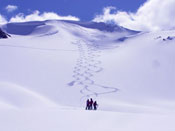
Hakuba provides an abundant variety of alpine alternatives and adventures for everyone to enjoy.
- Groomed cross-country courses wind their way through some of the most spectacular terrain to be found in the Japan Alps. Ski the Olympic cross-country courses or the scenic Nordic courses at Minekata and Tsugaike ski resorts.
- Experience guided ski/snowboard and snowshoe tours in the Alps.
- Try out snow tubing, tobogganing, snow rafting and spring heli-skiing that is available at various resorts in the valley.
- For those wanting to have a break from the Alps, take in the history and culture of Nagano with tours departing from Hakuba to Matsumoto Castle, Nagano's famous Zenkoji Temple and the snow monkeys at Jigokudani hot springs.
Onsen—
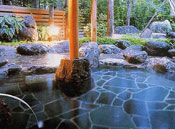
An onsen is a Japanese hot spring. Traditionally, onsen were located outdoors, although a large number of inns have now built indoor bathing facilities as well. Onsen by definition use naturally hot water from geothermally-heated springs. Onsen should be differentiated from sentÿ, indoor public bath houses in the city where the baths are filled with heated tap water. Major onsen resort hotels often feature a wide variety of themed spa baths and artificial waterfalls in the bathing area.
Onsen water is believed to have healing powers derived from its mineral content. A particular onsen may feature several different baths, each with water with a different mineral composition. The outdoor bath tubs are most often made from Japanese cypress, marble or granite, while indoor tubs may be made with tile, acrylic or stainless steel.
Download Japan/ China Information Package here.
|